Celtia: The Elegant Script Handwritten Font Review
If you are searching for a Celtia free download or looking to Celtia font download for your next creative project, you have likely stumbled upon one of the most versatile typefaces in the modern design landscape. This unique and elegant handwritten font offers a distinct personality that stands out in a crowded digital marketplace. Whether you need a premium Script Handwritten font for high-end branding or a free Script Handwritten font for Fonts libraries, Celtia delivers a sophisticated touch that elevates any visual composition.
In this comprehensive review, we will explore the intricacies of Celtia, analyzing its design merits, ideal use cases, and licensing requirements. By understanding how to effectively utilize this typeface, designers can create more impactful and professional layouts.
Introduction — What is Celtia?
Celtia is not just another script; it is a carefully crafted typeface designed to mimic the fluidity and charm of natural handwriting while maintaining the legibility required for commercial applications. As a professional Fonts font, it bridges the gap between casual brush scripts and formal calligraphy. Its character set includes both uppercase and lowercase letters, along with essential punctuation and diacritics, making it suitable for international projects.
The primary appeal of Celtia lies in its ability to convey warmth and personalization. When you download Celtia font free from reputable sources, you gain access to a tool that instantly adds a human element to digital designs. It is particularly renowned for its organic flow, which makes it an excellent choice for brands seeking to appear approachable yet refined.
Design & Style Analysis
To truly appreciate Celtia, one must look beyond its surface aesthetics and examine its structural integrity. The font belongs to the Script Handwritten category but avoids the overly decorative pitfalls that plague many similar typefaces. Below, we break down the key design elements.
Letterforms and Flow
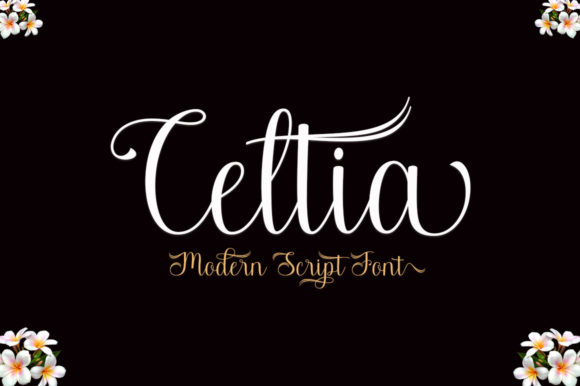
The letterforms in Celtia are characterized by their smooth, continuous strokes. Unlike rigid block scripts, Celtia features subtle variations in stroke width that emulate the pressure of a real pen. This dynamic quality gives the text a sense of movement and energy. The connections between letters are natural, avoiding awkward tangles that can hinder readability. For designers asking what fonts pair well with Celtia, the answer often lies in simplicity, allowing these intricate letterforms to take center stage.
Weight and Spacing
Celtia typically presents itself in a single weight class, though its visual weight varies depending on the complexity of the word. The spacing (kerning) has been pre-optimized to ensure that words sit comfortably together. However, as with all display scripts, manual adjustment may be necessary for specific headings. The generous internal counters within letters like 'a', 'e', and 'g' contribute to its open and airy feel, preventing the text from looking cramped or heavy.
Mood and Personality
The mood of Celtia is undeniably romantic and artistic. It evokes feelings of nostalgia and craftsmanship. This makes it a perfect candidate for industries that value heritage and authenticity. Compared to other best Script Handwritten fonts for use case scenarios, Celtia strikes a balance between elegance and usability, making it less restrictive than formal copperplate scripts but more polished than casual marker fonts.
Best Uses for Celtia
Understanding where to apply Celtia is crucial for maximizing its impact. While it is a flexible typeface, certain applications highlight its strengths more than others. Here are some of the most effective ways to use this font.
Celtia for wedding invitations/cards/typography
One of the most popular applications for Celtia is in the wedding industry. Its romantic flair makes it ideal for Celtia for wedding invitations/cards/typography. Designers frequently use it for save-the-dates, RSVP cards, and menu headers. The handwritten style adds a personal touch that guests appreciate, suggesting care and attention to detail. When paired with minimalist sans-serif fonts for body text, Celtia creates a beautiful hierarchy that guides the reader’s eye through the invitation suite.
Celtia for logo design
Can a script font work for a logo? Absolutely, if chosen correctly. Celtia is an excellent option for Celtia for logo design, particularly for businesses in the beauty, fashion, and artisanal food sectors. Its distinctive shape can serve as a memorable logotype. However, designers should ensure that the logo remains legible at smaller sizes, such as on social media avatars or business cards. Testing the logo in black and white is a critical step to verify its structural soundness.
Celtia for branding
Beyond individual assets, Celtia plays a significant role in holistic brand identity. Using Celtia for branding helps establish a voice that is friendly, creative, and trustworthy. It works exceptionally well for boutique hotels, yoga studios, and craft breweries. The font’s versatility allows it to adapt to various brand colors and textures, reinforcing the brand’s narrative across multiple touchpoints.
Celtia for posters/social media/packaging
In the realm of marketing materials, Celtia shines as a display font. For Celtia for posters/social media/packaging, it grabs attention immediately. On Instagram stories or Facebook ads, the handwritten aesthetic cuts through the noise of standard geometric fonts. On product packaging, it suggests handcrafted quality, which is a powerful selling point for small batch goods.
Font Pairing & Combinations
One of the most common questions designers ask is, "what fonts pair well with Celtia?" The key to successful pairing is contrast. Since Celtia is a decorative script, it needs a neutral partner to ground the design.
Celtia font pairing strategies often involve combining it with clean sans-serifs or classic serifs. For a modern look, pair Celtia with a geometric sans-serif like Montserrat or Lato. The stark contrast between the organic script and the rigid geometry creates visual interest. Alternatively, for a more traditional feel, combine Celtia with a transitional serif like Garamond or Baskerville. This combination exudes sophistication and is perfect for editorial designs or luxury branding.
When creating best font combinations with Celtia, remember to limit yourself to two typefaces per layout. Let Celtia handle the headlines and emotional appeal, while the secondary font handles the informational content. This ensures readability and maintains a clean, professional aesthetic.
Licensing & Commercial Use
Before using Celtia in any project, it is essential to understand the legal implications. A frequent query among designers is, "is Celtia free for commercial use?" The answer depends entirely on the source from which you obtained the font.
Generally, many free Script Handwritten font for Fonts repositories offer Celtia under a personal use license. This means you can use it for personal projects, such as greeting cards for friends or personal blog graphics, without paying. However, for Celtia commercial use, you typically need to purchase a commercial license. This license grants you the right to use the font in products that generate revenue, including logos, merchandise, and advertisements.
Always check the Celtia font license agreement provided by the foundry or distributor. Some licenses may restrict the number of devices or users, while others may require attribution. Understanding these terms protects you from legal issues and supports the type designers who created the font.
How to Download & Use Celtia
Getting started with Celtia is straightforward. If you are looking for a Celtia free download, platforms like DaFont, FontSquirrel, and CreativeFabrica often host the typeface. These sites provide easy installation instructions for both Windows and Mac operating systems.
Once installed, you can use Celtia in various software applications. Learning how to use Celtia in Canva/Word/Photoshop is simple: simply select the font from your dropdown menu just like any other typeface. In Photoshop, you can experiment with layer styles to add shadows or glows, enhancing the handwritten effect. In Canva, Celtia is often available in the text editor, allowing for quick mockups and social media posts.
For those seeking higher resolution files or additional weights, purchasing a font bundle or font pack from premium marketplaces like MyFonts or Typekit might be beneficial. These platforms often provide better customer support and updated versions of the font.
Designer Notes & Tips
As a final note, here are some practical tips for working with Celtia. First, always test your design in black and white. This helps you see if the font’s structure holds up without the distraction of color. Second, pay attention to small-size readability. Scripts can become muddy when scaled down, so avoid using Celtia for body text longer than a few lines.
Finally, consider Celtia vs similar font comparisons. While there are many brush scripts available, Celtia’s specific balance of elegance and legibility sets it apart. It is less chaotic than typical brush fonts and more approachable than formal calligraphy. By keeping these factors in mind, you can leverage Celtia to create stunning, professional designs that resonate with your audience.